Preferred Big Game Fly Equipment
Sailfish and Blue Marlin on the fly is quickly becoming a popular demand here in Guatemala. Mainly because of the number of chances in a given day, all year round. As far as recommended equipment goes we have some very simple guidelines. For starters we would plan on a 12 wt to 14 wt set up for both the rod and reel, nothing less. The reel is quality is very important, especially what a drag is capable of. We suggest the following: Abel super 12, Abel big game 4, and select models by Tibor.
The rod doesn't need to be anything special, just fast action and heavy. It will feel funny at first (like a broom stick), but you will see why this stiffness is needed. Temple Fork, Cam Sigler & Orvis is what we use.

The Fly And A How To Tie It
The fly used here is the Cam Sigler popper heads with PINK chicken feathers.
We will also provide the fly hooks free of charge, but bring size 5 octapus hooks. The choice is yours. If you want to tie it yourself direct purchase of the popper head from Blue Bayou Sport Fishing will save you greatly.
How to tie a Cam Sigler Fly


Backing
Note that the backing is one of the most important parts in fly fishing for billfish. We recommend gel spun by Orvis, Rio & Scentific Angler. We put anywhere from 400 yds to 600yards of 35 lb to 45lb gel spun on our reels. With lots of backing in the water and high speed runs with sails the pressure on the backing is immense. So that’s why backing it is the greatest investment if you ask us.
**Please see the following article & picture about rigging your sailfish fly reel**

Here is a system to set up for Billfish. We use Suffix Key Lime for the mono and cut back Rio Leviathan flylines. Other brands will work we have used these brands over much time with great success and just happen to like them. We also prefer sinking lines or heads for the reason that you can easily load big rods without having much more than the head or sinking portion out of the rod to make a quick and easy cast, and their diameter is smaller than floating lines and thus creates less drag in the water. You will note that we use bright backing and use mono in between the backing and the flyline. This length of mono allows some stretch in the system and avoids breaking your flyline off at the juncture to backing and also takes some stress off of the class tippet. We use bright mono so that the Capt can always see the line, and also use this mono for the butt section off of the end of the flyline that you can loop a bimini leader or other leader into to easily and quickly change flies and by looping the mono to the backing. This allows you to change the mono and flyline out quickly if it gets broken or abraided. We also use this system when setting up for other big pelagic fish like tuna, however we would leave the flyline full length in case you need to cast some distance and would change the butt section of the leader to fluorocarbon as non billfish species can be leader shy .

4 Strand Double Overhand Loop Knot
We use this knot to attach backing to Mono or flylines with loops when using spectra type or small diameter backings. The only trick is to make all of the loops the same exact length. With the 4 strands, this displaces the pressure across all strands and does not allow the backing to cut through mono or flyline cores. This knot, with a little practice, even with all the strands, is fairly easy to tie. You also have the right to have our mates rig your gear in a days notice.
Bait and Switch

It’s no secret that one of the most effective ways to target marlin or sailfish is the bait and switch practices. This is simply trolling with many hook less teasers and pitching dead ballyhoo's rigged with circle hooks once you’ve raised a fish. Bait and switch requires a little bit of teamwork and timing, but generally it’s pretty straight forward as long as you keep everything simple. We will run 2 teasers 10-15 yards off the back of the boat, and a long teaser at about 25-30 yards. In addition we will have two lines out with ballyhoo rigged with circle hooks on the outriggers, and one pitching reel out of the water for the flats (center and short area of the boat). The more teasers you add to the equation, the more confusion you bring for both the crew and the fish. When the sail or sails come, all hell breaks loose in a controlled matter.
The Captain will have control of at least 1 to 2 teasers and he will call out the position of the fish. For example ‘’Left rigger’’, or ‘’right teaser flats’’ ,etc.Adios!
Capt Christopher Starrs

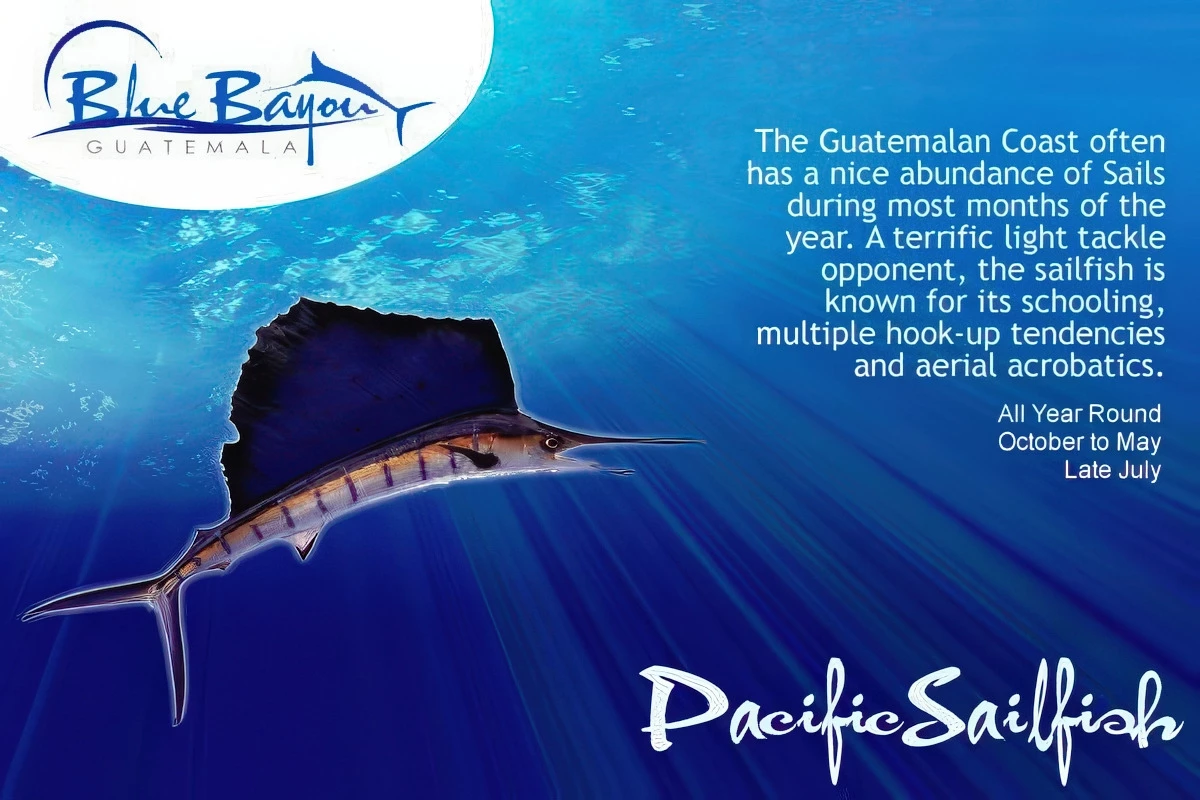
Pacfic Sail Fish - All year round. Peak months are Late Oct to early June. Averages can be 20 sailfish releases to 80 plus on a ''great'' day. Add a hand full of dorado, a marlin or two, and you will have an untouchable day.
People tend to assume that the winter is the best time for sailfishing in Guatemala. The reason why we are so productive is the currents in which hold bait in front of our port. In addition the current is pretty much perfect year round. Unlike Costa Rica that seems to have better fishing in one spot vs another, we have constant action year round in Guatemala. In July we have even caught 50 plus sailfish. Ask your Capt, and he will advise prime times. Summer months mean short runs and calm ocean!
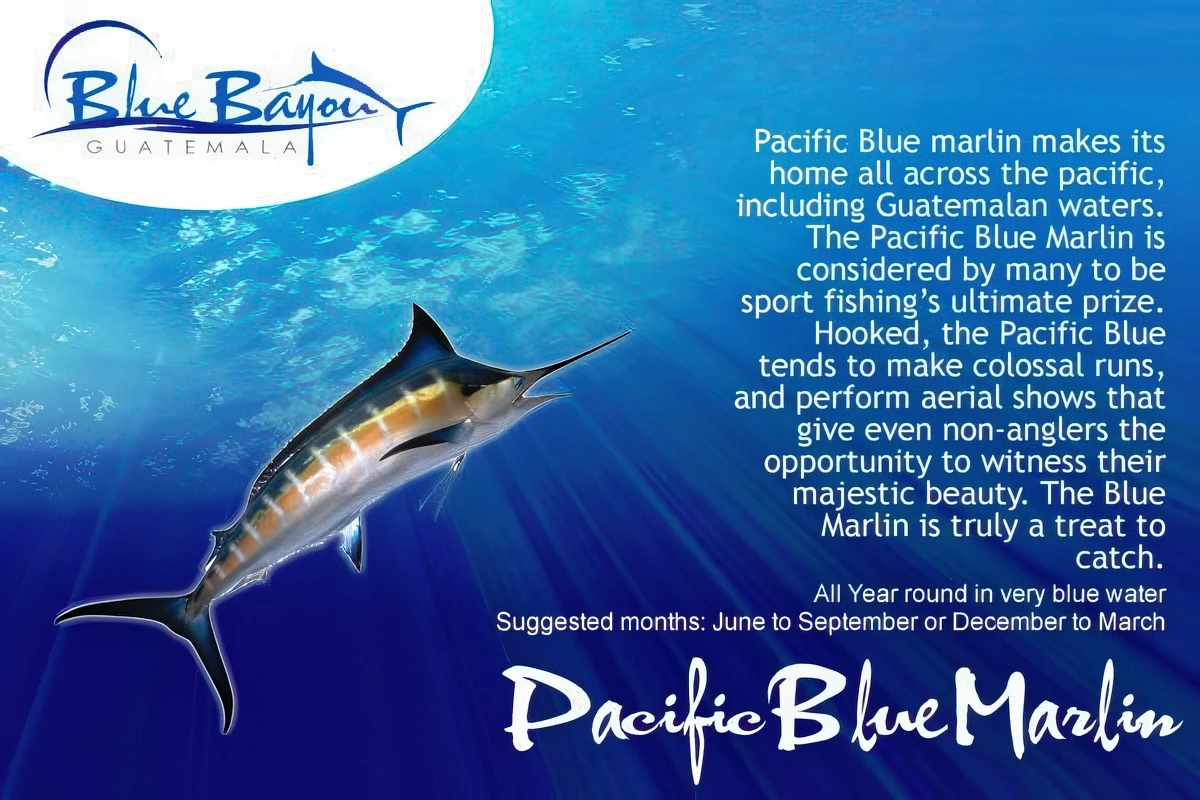
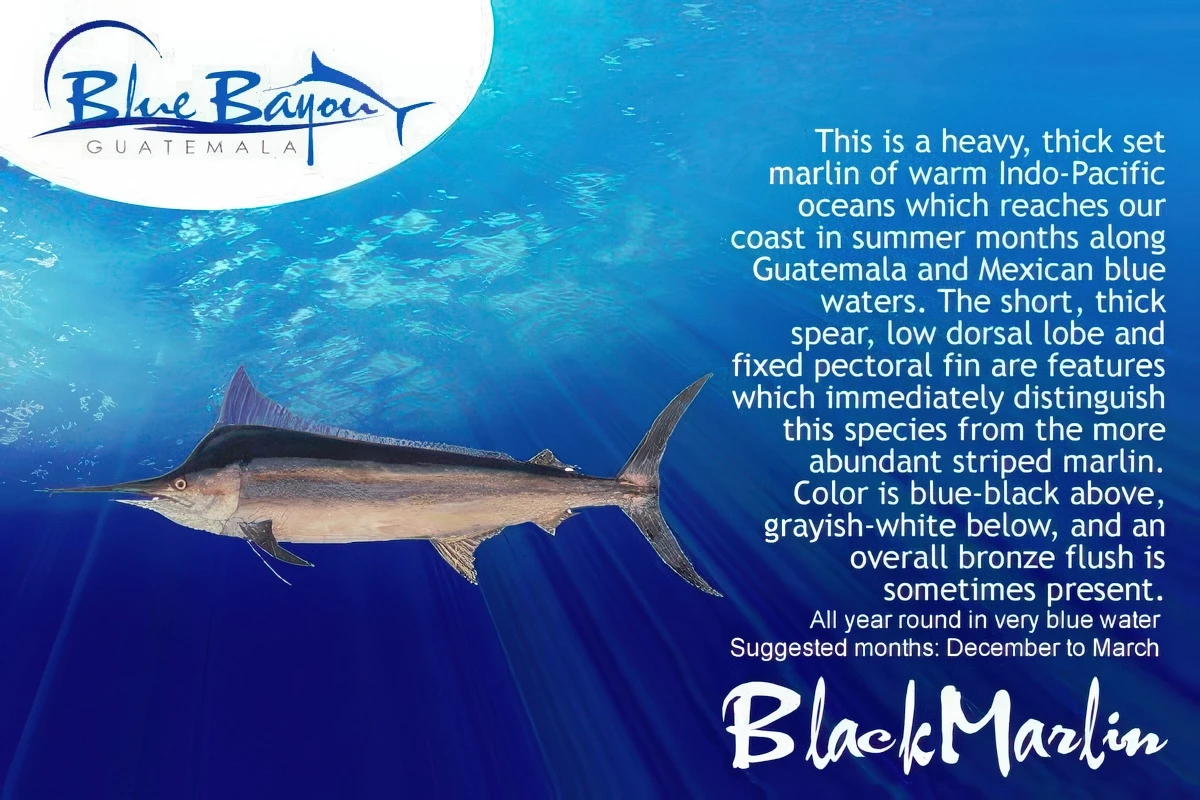
Pacific Marlin- Blue, Black & Stripe all year round potentially. Late spring to December seems to be the best months. Stripe marlin show up in Oct and stick around until December/January. August has been a great month for blues lately throughout the region. Summer months in general BIG blues.
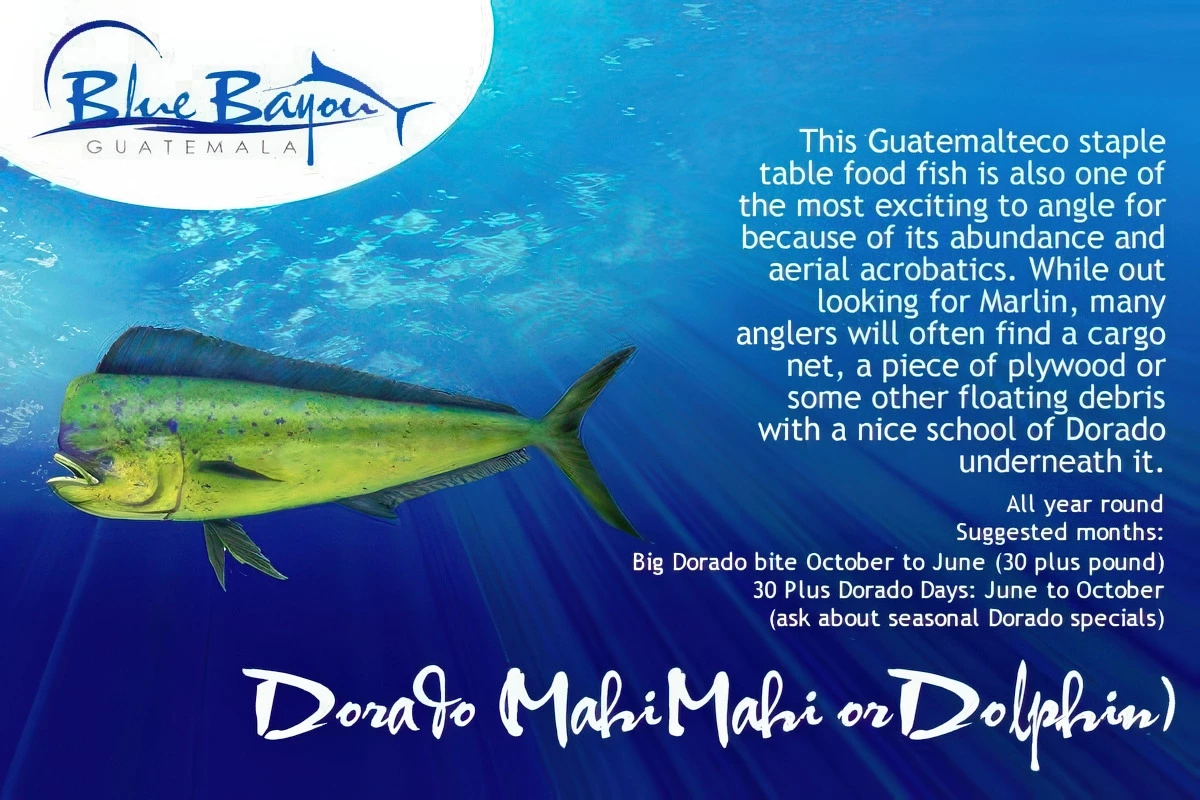
Dorado- All year round. June to Oct, they are thick promoting a good marlin diet. Oct until May dorado can be 30 to 50 lbs!
Tuna- The bite can be close at 20 miles, but usually 30 plus miles are the great numbers. 30-80 plus lbs and fearless. August until December holds a good tuna bite. However, year round tuna fishing is possible. Find the cool temps and get off the ledge and you will likely find a school!
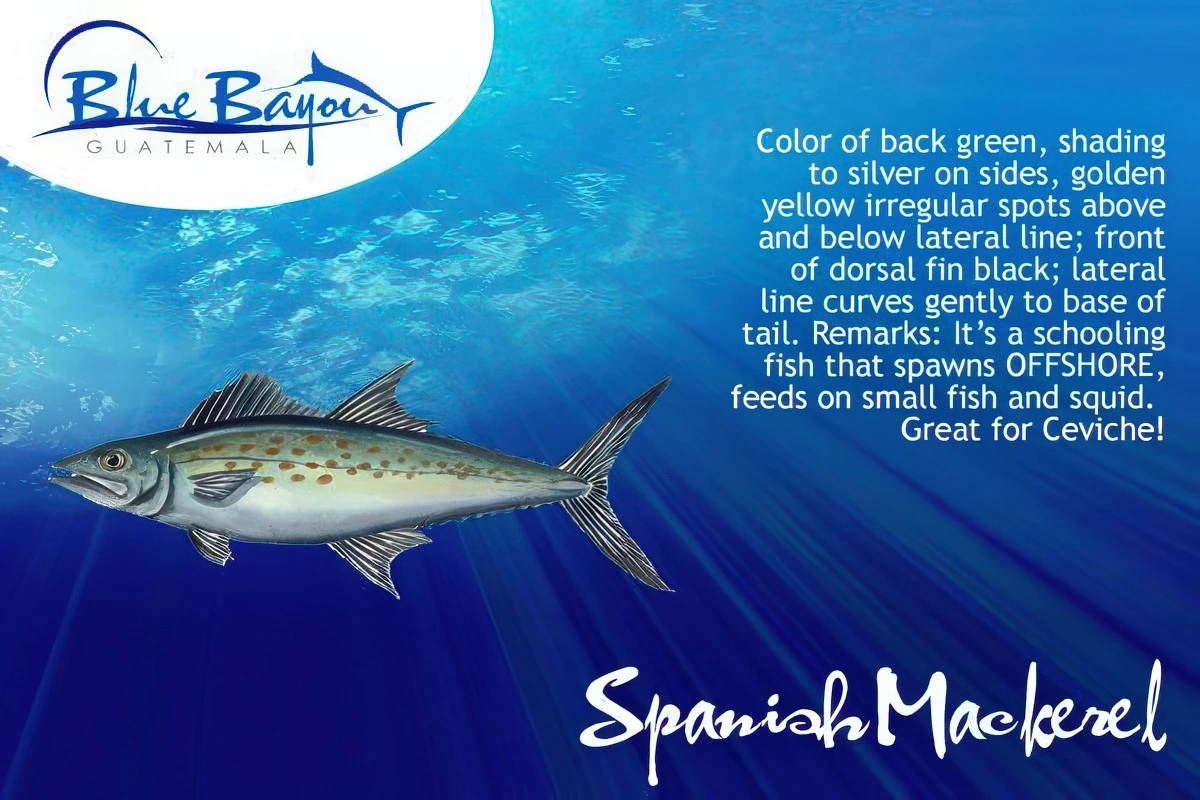
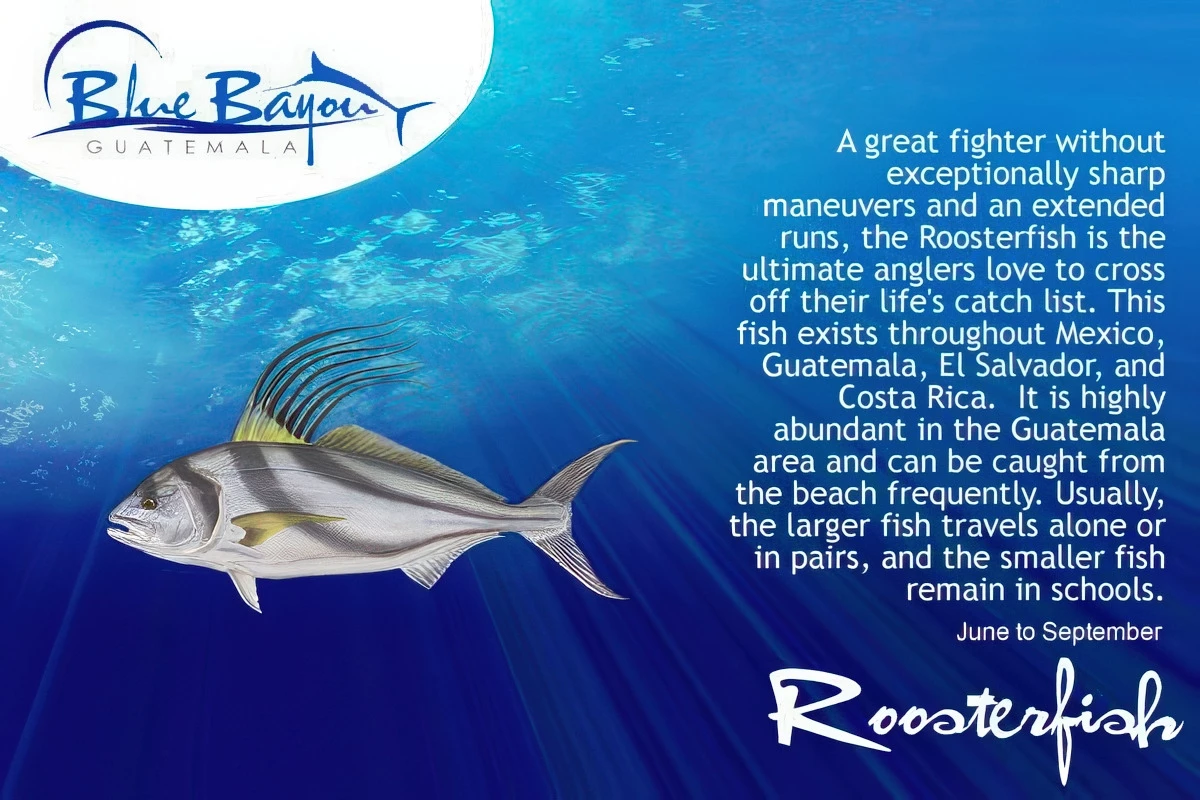
Inshore- When the water clarity is clear and the tide is up, the rooster fishing can be GREAT! Along with snapper, and late night snook fishing just outside of the lodge doors in the channel. Spainsh macks and Jacks around shrimp boats are great fun as well.
NOTE* All clients will be VERY involved in the bait and switch practices of bill fishing. By your third day, the mates will only be instructed to assist you with the bait rigging and teasing of the fish. You are on your own to hook the fish and free spool on a big hungry sail.
Where We Go & Why
Part of being successful in this fishery is exploring the limits, and starting trends, not following them. Each day currents change and the fishery changes with it. While some local guides will follow the crowd, we break free and use advancements in technology to our advantage. Systems such as Terrafin & Hiltons, allows us to see satellite imagery for current flow, temperature breaks, and most importantly chlorophyll charts. These fish thrive in blue water. We don't leave the dock until the Captains involved in your charter talk about the information needed to get you on fish! Below are sample charts we use.


The Spread


Equipment
Only the best for our guest! On board of all of our boats you will find new shimano tyrnos (5 to 1) 20's & 30s for sails & TLD 50's for marlin. Rods: Crowder! Very important with this type of fishing you charter a boat with ''high speed'' reels. 5 to 1, to 6 to 1, makes angling easier and more productive. You will be happy to know that we spare no expense with our reels and maintenance. Meaning all of our equipment gets fresh line daily and reels are constantly broken down per trip. The same quality can be expected with our fly equipment. We carry the best, so you won't have to, making the trip down hassle free. Our boats come with Tibor, Temple Fork & Abel fly reels with temple fork 12 to 14 wt rods.

Lodge Records & Highlights: